
Losing a single tooth may not seem like a major dental concern, especially when the gap is hidden near the back of your mouth. You might still eat your favorite foods, speak normally, and smile without feeling uncomfortable. However, the surrounding teeth and jawbone can gradually change if you leave a missing tooth untreated.
For residents considering dental implants in Asheville, understanding what happens after tooth loss can help prevent future oral health concerns. At West Asheville Family Dentistry, we help patients understand their replacement options and why restoring missing teeth before additional problems develop matters.
What Happens When You Leave a Missing Tooth Untreated?
Every tooth contributes to your bite’s overall function and stability. When one tooth is lost, the surrounding teeth no longer have the same support.
Over time, neighboring teeth may begin shifting toward the empty space. The opposing tooth may also move because it no longer contacts its usual chewing partner. These changes can affect how your teeth fit together and how pressure is distributed when you chew.
Some patients notice changes within months, while others experience problems gradually over several years.
Your Bite May Become Uneven
When nearby teeth move into the gap, your upper and lower teeth may no longer meet in their usual positions.
This can create uneven chewing pressure and make certain foods more difficult to eat.
Food May Become Trapped Between Teeth
Shifting teeth can create spaces that trap food particles.
These areas may become difficult to clean, increasing the risk of cavities and gum inflammation.
Your Remaining Teeth May Experience Additional Pressure
When a tooth is missing, other teeth may compensate during chewing.
This can place additional stress on certain teeth, especially when multiple teeth are missing.
Can Losing One Tooth Cause Jawbone Loss?
Yes. The jawbone surrounding a natural tooth receives stimulation through its root during normal chewing.
When the tooth is removed, the bone in that area begins remodeling because the root is no longer present. This process is called bone resorption.
Bone changes often begin during the first several months following extraction. The amount of bone loss varies from patient to patient. Over time, the ridge where the tooth once stood may become narrower or shorter.
This matters because sufficient bone is necessary to support a dental implant. Patients who wait several years before replacing a missing tooth may need additional evaluation or bone grafting before placing an implant.
However, waiting does not automatically mean that an implant is no longer possible.
How Can Dental Implants Replace a Missing Tooth?
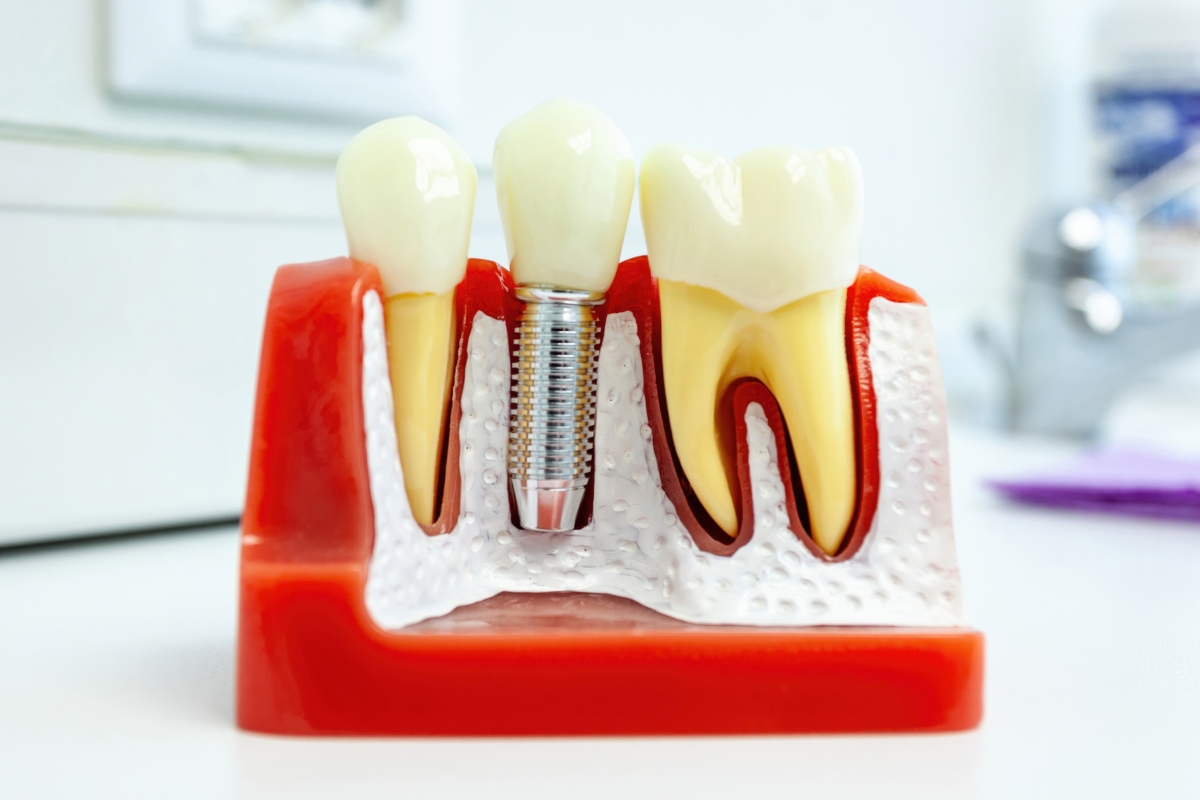
A dental implant is designed to replace the root of a missing tooth and support a dental restoration.
A single-tooth implant generally includes three components: the implant fixture, an abutment, and a dental crown. The implant fixture is surgically placed into the jawbone. After healing, the abutment connects the implant to the crown.
The final crown restores the visible portion of the missing tooth. Unlike a traditional dental bridge, an implant-supported crown usually does not require reshaping neighboring healthy teeth.
Why Do Patients Consider Implant-Supported Crowns?
Implant-supported restorations offer several potential benefits. They can restore chewing function, improve the appearance of a missing tooth, and help maintain spacing between neighboring teeth.
Implants also transfer chewing forces into the jawbone, which may help limit additional bone loss around the implant.
However, successful treatment depends on healthy surrounding tissues, adequate bone support, and appropriate maintenance.
What Happens During an Implant Consultation?
At West Asheville Family Dentistry, we help patients understand the restorative stage of dental implant treatment and coordinate surgical placement with an oral surgeon.
Dr. Bernier can examine the area where a tooth is missing, review your oral health, and discuss whether an implant-supported crown may be appropriate.
Your evaluation may include dental imaging to assess the surrounding teeth and bone. The treatment plan also considers gum health, bite alignment, available space, and your medical history.
Some patients can proceed with implant placement after initial planning. Others may need additional treatment before surgery.
Understanding these steps early can help you prepare for the complete restoration process.
Is It Too Late to Get an Implant Years After Tooth Loss?
Not necessarily; many patients receive dental implants several years after losing a tooth.
However, the amount of remaining bone and the position of neighboring teeth can influence treatment.
If adjacent teeth have moved into the space, orthodontic treatment or additional restorative planning may sometimes be necessary. Patients with significant bone loss may require grafting.
An examination helps determine whether an implant remains a suitable option.
What Other Options Can Replace a Missing Tooth?
Dental implants are not the only solution. A traditional dental bridge uses neighboring teeth to support an artificial replacement tooth. This can restore appearance and chewing function without implant surgery.
A removable partial denture can replace one or several missing teeth.
The right option depends on your dental health, preferences, treatment timeline, and budget. For patients in West Asheville, Candler, Leicester, and Enka, discussing these options before substantial tooth movement occurs can make future planning easier.
How Soon Should You Replace a Missing Tooth?
No single timeline applies to every patient. Some implants can be placed immediately after extraction, while others require a healing period.
The location of the tooth, presence of infection, bone condition, and overall health influence timing. The key step is getting an evaluation rather than assuming treatment can wait indefinitely.
Even if you are not ready to begin treatment, your dentist can explain how to monitor the area and protect your remaining teeth.
Frequently Asked Questions (FAQs)
Can I get a dental implant several years after losing a tooth?
Yes, many patients remain candidates years after extraction. Our dentist will evaluate bone volume, gum health, and tooth spacing before recommending treatment.
Where can I discuss dental implants in Asheville?
Our office provides implant restorations and works with an oral surgeon for surgical placement. We can evaluate your missing tooth and explain the restorative treatment process.
Will my teeth move if I don’t replace a missing molar?
Neighboring teeth may gradually tilt toward the empty space. The opposing tooth can also shift, potentially affecting your bite.
Can patients from Candler schedule an implant restoration consultation?
Yes. We welcome patients from surrounding Asheville communities who want to discuss missing-tooth replacement and restorative dentistry.
How long does dental implant treatment take?
Treatment often takes several months because the implant must integrate with the jawbone. Additional procedures may extend the timeline.
Does your Asheville office provide crowns for dental implants?
Yes. We provide implant restorations, including crowns, and can coordinate with an oral surgeon for implant placement when appropriate.
Don’t Let One Missing Tooth Affect the Rest of Your Smile
A missing tooth may not cause immediate discomfort, but your bite and jawbone can change over time. Understanding your replacement options early may help preserve your remaining teeth and support long-term oral health.
Dr. Bernier can evaluate your dental needs and discuss whether an implant-supported crown or another restoration may be appropriate.
Contact West Asheville Family Dentistry at (828) 255-8676 to schedule your consultation at 627 Haywood Road, Asheville, NC.